ISO 9001:2015 Certified — Supplying Nigeria & West Africa
CO2 Generation Plant
Supplier for Nigeria
MOS Techno Engineers supplies fully automated CO₂ Generation Plants to Nigeria's beverage, food processing, and industrial gas sectors — delivering 99.99% food-grade purity with capacities from 50 KG/HR to 2,000 KG/HR. Trusted by bottling plants across West & East Africa.
CO₂ Gas Plants Built for Nigeria's Beverage & Industrial Sector
Nigeria is one of Africa's fastest-growing markets for carbonated soft drinks, beer, and packaged food — all of which require a reliable, high-purity CO₂ supply. MOS Techno Engineers designs and exports turnkey CO₂ Production Plants engineered specifically for Nigerian site conditions: tropical ambient temperatures, diesel-primary fuel infrastructure, and the high-throughput demands of large-format bottling operations in Lagos, Abuja, Port Harcourt, Kano, and Ibadan.
Our plants operate on diesel, natural gas, or LPG — giving Nigerian manufacturers the flexibility to select the most cost-effective and available fuel source at their specific location. Each system arrives as a fully factory-tested, turnkey solution with on-site commissioning and operator training delivered by our engineers.
Nigerian beverage producers and industrial gas companies trust MOS plants because they deliver 99.99% food-grade purity compliant with ISBT standards — the same benchmark required by Coca-Cola, Pepsi, and Seven-Up bottling franchises. Our systems are designed for continuous 24×7 operation in high-ambient environments, with minimal consumable requirements and long service intervals suited to African operating conditions.
Whether you are setting up a new CSD bottling line in Lagos, expanding a brewery in Onitsha, or establishing an industrial gas distribution centre in Port Harcourt, our CO₂ plants are available in capacities from 50 kg/hr to 2,000 kg/hr to match your exact production scale.
A proven 5-stage process — from controlled combustion to food-grade liquid CO₂ ready for bulk cryogenic storage or cylinder filling operations in Nigeria
01
Controlled Combustion
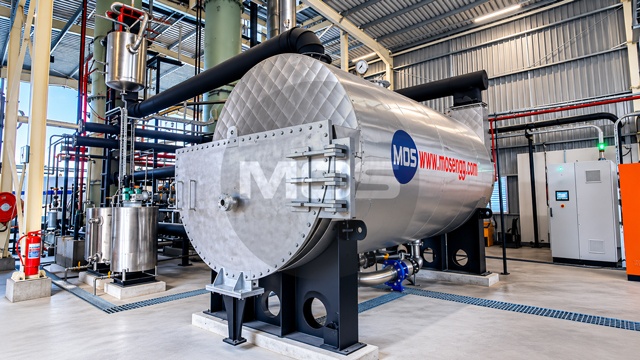
Fuel — diesel, natural gas, or LPG — is burned under precisely controlled conditions in the combustion chamber, generating a CO₂-rich flue gas stream as the raw feedstock for the plant.
02
Scrubbing & Absorption
The flue gas is scrubbed with water and soda ash to remove sulphur compounds (SO₂), then passed through the absorber tower where a lean MEA solution selectively captures the CO₂ content.
03
Stripping & Purification
The CO₂-loaded MEA solution is heated in the stripper tower to release concentrated raw CO₂ gas, which then passes through an oil-free two-stage compressor and a high-pressure stainless steel purifier.
04
Drying & Filtration
CO₂ passes through an automatic dual-column molecular sieve drier and an iV 1100 grade activated carbon filter — eliminating residual moisture, odours, and trace aldehydes to meet food and beverage specifications.
05
Liquefaction & Storage
Purified CO₂ is condensed into liquid form via an R404a refrigeration system and held at 18 bar / −24°C in insulated storage tanks, ready for cylinder filling or direct process supply.
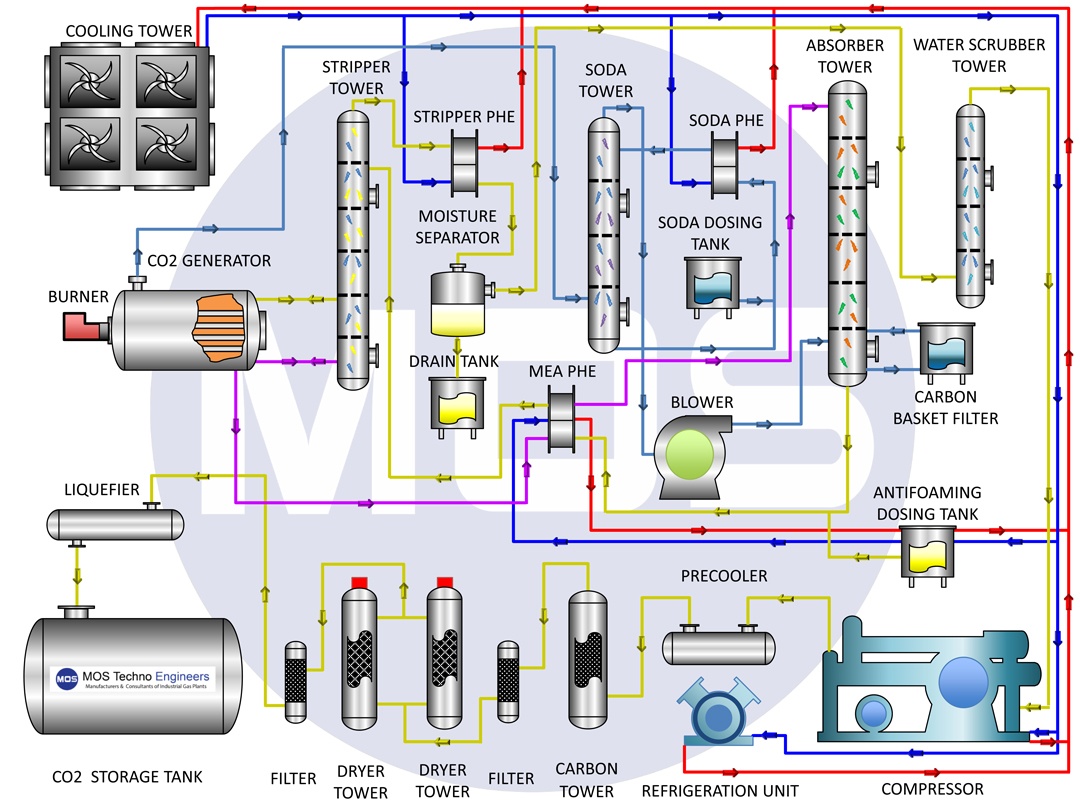
Schematic Diagram Of CO₂ Production Process
Inside a CO₂ Plant — How Purity is Achieved
The CO₂ generation system recovers CO₂ from combustion flue gas in a continuous closed-loop process. Flue gas first enters the Scrubber Tower where it is washed with soda lye solution to strip out sulphur (SO₂) and cool the gas stream before it enters the absorber circuit.
Inside the absorber tower, lean MEA solution reacts with and captures the CO₂, while the remaining inert gases are vented safely. The CO₂-rich MEA solution is preheated via a plate heat exchanger before entering the stripper, where steam releases the CO₂ gas at high concentration. The gas is then compressed in a non-lubricated two-stage compressor to below 17.5 kg/cm².
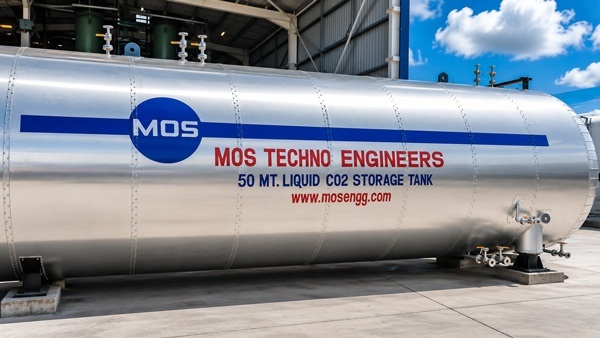
Compressed CO₂ passes through an iV 1100 grade activated carbon tower to eliminate odour and aldehydes, then a dehydrater tower to achieve a dew point of −70°C to −80°C. The dried gas is chilled to −24°C in the liquefier, converting it into food-grade liquid CO₂ stored in a CO₂ storage tank — ready for Nigerian beverage and industrial applications.
Nigeria Market Fit
Why Nigerian Manufacturers Choose MOS CO₂ Plants
Engineering features and support capabilities matched to Nigeria's operating environment, fuel infrastructure, and industrial growth requirements
01
Diesel-Primary Design
Nigeria's diesel infrastructure is well-established across all commercial and industrial zones. Our plants are optimised for diesel-fired operation — low maintenance, high CO₂ yield, and reliable output even where grid power or gas pipeline access is limited.
02
High-Ambient Tropical Performance
All cooling systems, refrigeration circuits, and process equipment are rated for continuous operation in tropical ambient temperatures — ensuring consistent food-grade CO₂ output year-round across Nigerian climate conditions without efficiency losses.
03
Oil-Free CO₂ Compressors
Dry-running compressors eliminate any risk of oil contamination in the CO₂ stream — a critical compliance requirement for Seven-Up, Nigerian Breweries, Guinness Nigeria, and all beverage-grade production lines operating under NAFDAC and ISBT standards.
04
Turnkey Export to Nigeria
We manage complete export documentation, shipping logistics to Lagos (Apapa/Tin Can), Port Harcourt, or other Nigerian ports, and provide on-site commissioning engineers — giving Nigerian buyers a single accountable supplier from factory to first production run.
05
Low Utility, High Output
Our plants are engineered for high CO₂ extraction efficiency from fuel — minimising diesel consumption per kg of CO₂ produced. This directly reduces operating costs for Nigerian manufacturers where fuel costs represent the largest variable expense.
06
PLC Automation — Minimal Operator Dependency
Full PLC-based automatic operation with one-touch process monitoring reduces reliance on specialist operators — an important advantage for Nigerian plants where technical skills shortages can affect operational continuity.
Technical Data
CO₂ Plant Utility Requirements — Nigeria Reference Data
Diesel-fired utility consumption across our full capacity range. All plants are custom-engineered for your exact Nigerian site — contact us for a site-specific utility calculation.
Production Capacity
Fuel — Diesel (kg/hr)
Water (m³/hr)
Power (kW)
50 kg/hr
17
0.5
35
100 kg/hr
35
0.6
48
200 kg/hr
70
0.8
80
300 kg/hr
104.9
1
115
500 kg/hr
175
1.25
180
1,000 kg/hr
349
2.5
390
2,000 kg/hr
1,745
3.5
552
* Figures shown are for diesel-fired operation — the most common configuration for Nigerian sites. Natural gas and LPG-fired variants have different consumption profiles. Contact us for a Nigeria-specific utility and operating cost estimate.
Liquid CO₂ Storage
Stored at 18 bar (261 psi) and −23°C in insulated pressure vessels with active cooling assemblies and digital pressure monitoring — designed for stable long-term storage in tropical ambient conditions.
Compression Pressure
CO₂ gas compressed in a non-lubricated two-stage compressor to below 16.5 kg/cm², then fed to activated carbon towers at 18 bar for final purification before liquefaction.
Safety Systems
Multiple automatic safety interlocks, pressure-relief circuits, and digital alert systems monitor the plant at all points — engineered to maintain safe operation during power interruptions common in Nigerian grid environments.
PLC Automation
Centralised PLC control panel with SCADA-ready architecture enables one-touch plant operation, remote monitoring capability, and data logging — reducing operator skill dependency and improving uptime in all Nigerian operating environments.
Need a detailed technical datasheet, utility estimate, or commercial proposal for a Nigerian project?
Every CO₂ plant we export to Nigeria is a fully integrated, ready-to-commission system. We supply comprehensive O&M documentation, in-country operator training, and commissioning supervision by our engineers at your Nigerian facility — so your team is fully equipped to run the plant from day one.
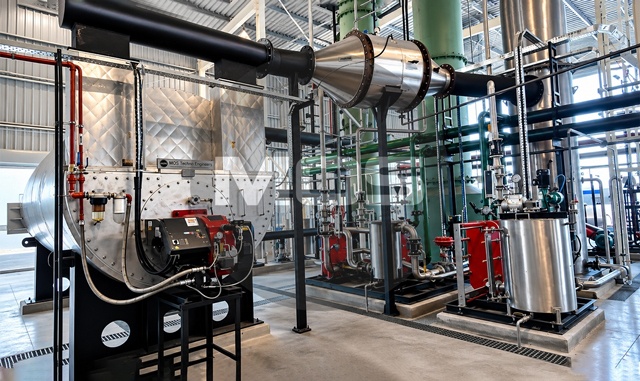
Fully-Automatic CO₂ Dehydrator System
CO₂ Liquefying System (R404a refrigeration loop)
Interconnecting Piping & Instrumentation
Motor Control Centre with PLC Control Panel
Water Cooling Tower with Dual Pumping Systems
High-Pressure Stainless Steel Purifier
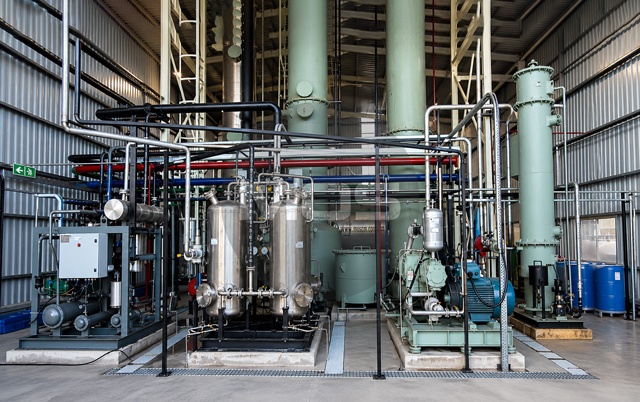
Scrubber Tower Scrubbing System
MEA Absorber & Stripper Towers
Activated Carbon Tower (iV 1100 grade)
Optional Water Recirculation & Treatment System
The PLC control system manages every stage of CO₂ generation — regulating combustion, absorption, compression, purification, and liquefaction automatically, with alarms and interlocks protecting the plant and personnel at all times.
Nigerian Industry Applications
Industries We Supply CO₂ Plants to in Nigeria
From Lagos bottling plants to Port Harcourt industrial gas hubs — our CO₂ systems serve Nigeria's highest-demand production sectors
CSD & Bottling Plants
Carbonated soft drink manufacturers including Seven-Up Bottling Company, Coca-Cola Nigeria, and Pepsi franchise bottlers require consistent food-grade CO₂ supply. Our plants deliver the volume and purity standards mandated by global brand owners.
Brewery & Beer Production
Nigerian Breweries, Guinness Nigeria, and craft brewers across the country depend on CO₂ for carbonation, tank blanketing, and packaging. Our plants are sized to match high-volume brewery CO₂ demands in Lagos, Aba, and Ibadan.
Industrial Gas Distribution
CO₂ cylinder filling stations and industrial gas distributors across Nigeria use our plants to produce and bottle CO₂ for onward supply to welding, food processing, fire suppression, and pharmaceutical end users.
Food Processing & Packaging
Modified Atmosphere Packaging (MAP), food chilling, freezing, and preservation operations in Nigeria's growing agri-food processing sector require food-grade CO₂ at scale — particularly for export-grade produce and packaged goods.
Oil & Gas / Chemical Sector
Nigeria's petrochemical and chemical manufacturing base uses CO₂ for pH control, enhanced oil recovery (EOR) pilot projects, dry ice production for perishable logistics, and chemical synthesis processes.
Water Treatment
Municipal water utilities and industrial wastewater treatment plants in Nigeria use high-purity CO₂ for pH correction, remineralisation, and carbonic acid generation — a growing application as water quality standards tighten.
Africa Support & Delivery
On-the-Ground Support for Nigerian Projects
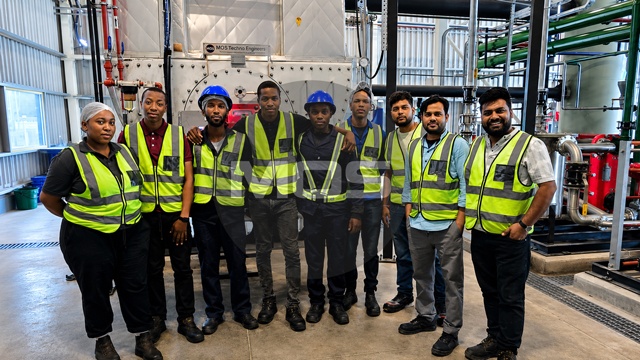
We don't just ship equipment — our commissioning engineers travel to your Nigerian facility to install, test, and hand over a fully operational plant. Local operator teams receive structured, hands-on training before our engineers leave site.
Nigeria Project ManagementDedicated project engineer assigned from order to commissioning
In-Country CommissioningOur engineers travel to your Nigerian site for full plant startup
Operator Training ProgramHands-on training for your Nigerian operations and maintenance team
Spare Parts & Long-Term AMCAnnual Maintenance Contracts with guaranteed response time for Africa
Africa & Global Track Record
Proven Across Africa — Trusted by Global Brands
MOS Techno Engineers has commissioned CO₂ plants for major CSD manufacturers and industrial gas producers across Sub-Saharan Africa and beyond — all built and tested to ISO 9001:2015 standards.
Our Clients
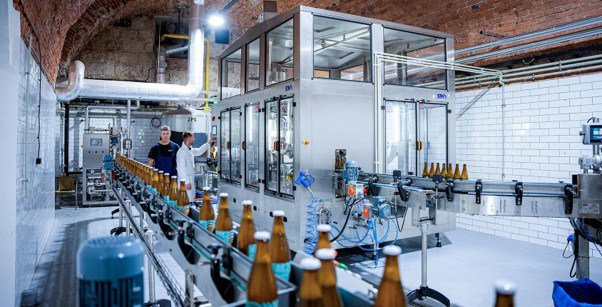
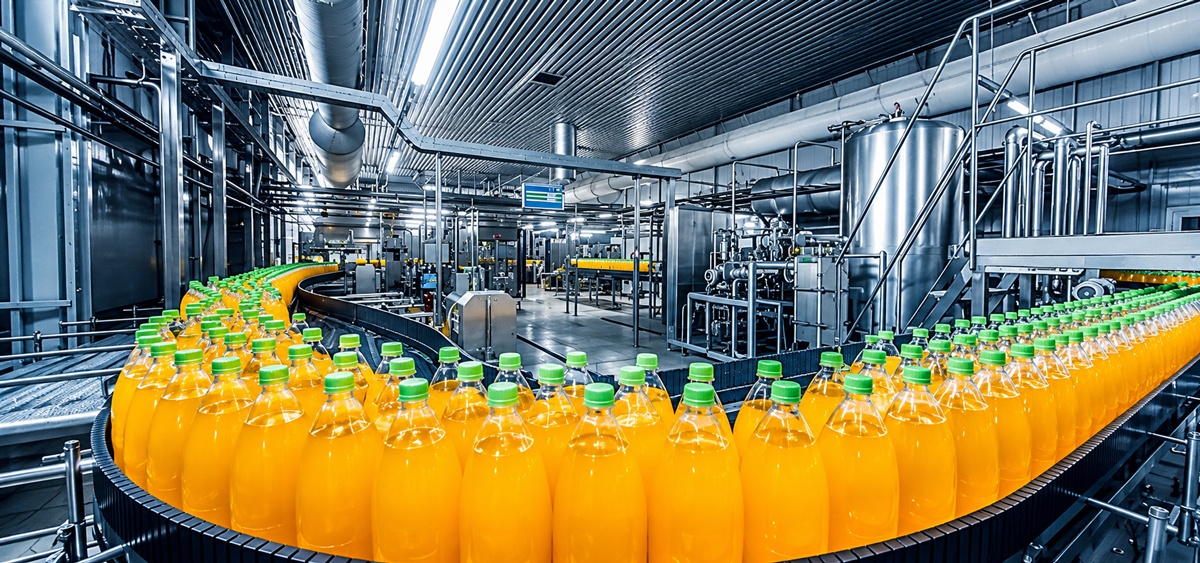
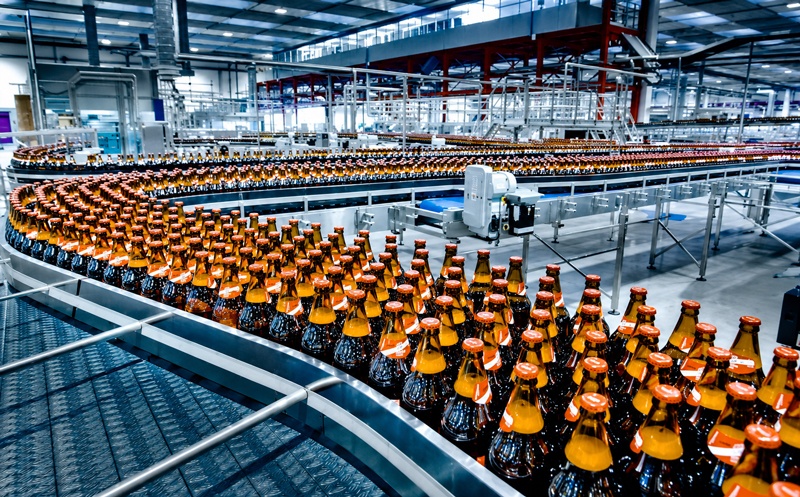
Production Line — Carbonated Soft Drink Plants We Supply CO₂ Systems For
CO₂ Carbonation System in a CSD Bottling Plant
High-Speed CSD Filling & Bottling Line
Full-Scale CSD Manufacturing & Bottling Facility
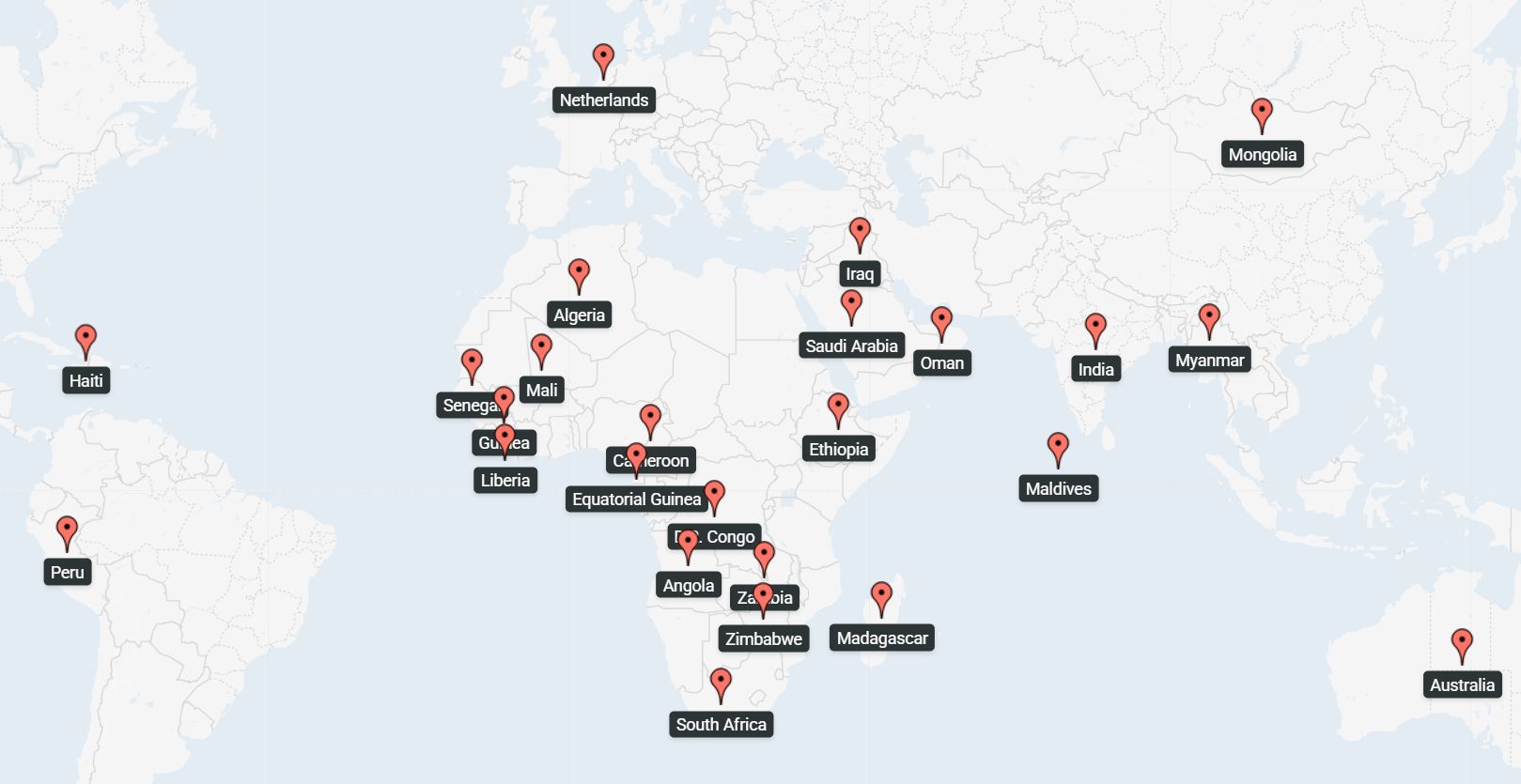
Our Global & Africa Presence
Quality & Standards
International Standards — Accepted Across Nigerian & African Markets
Every MOS CO₂ plant shipped to Nigeria is designed, manufactured, and tested to internationally recognised standards — meeting the compliance requirements of global beverage brands, NAFDAC-regulated food producers, and Nigerian industrial gas distributors.
01
Material & Component Inspection
Rigorous incoming inspection of all raw materials, pressure vessels, and instrumentation before fabrication commences — no substitution without approval.
02
Pressure & Leak Testing
All pressure vessels undergo hydrostatic testing and all gas circuits undergo pneumatic leak testing before the plant is cleared for export.
03
CO₂ Purity Analysis
A full purity analysis and quality certificate is issued for every plant prior to dispatch — confirming ISBT-compliant 99.99% food-grade output.
04
Safety Interlock Verification
All safety circuits, pressure interlocks, and alarm systems are independently verified and function-tested before the plant leaves our facility.
05
Factory Performance Run
Each plant completes a full production run at our works — validating capacity, purity, utility consumption, and control system behaviour before shipment to Nigeria.
06
Export Documentation Package
Full compliance documentation, P&IDs, O&M manuals, certificates of origin, and inspection reports supplied with every plant exported to Nigeria.
FAQ
Frequently Asked Questions — CO₂ Plants in Nigeria
Questions we receive from Nigerian beverage manufacturers, industrial gas producers, and project developers
Yes. MOS Techno Engineers exports fully automated CO₂ production plants to Nigeria and across West Africa. We manage the complete process — design, fabrication, factory testing, export documentation, sea freight to Lagos (Apapa/Tin Can) or Port Harcourt, and in-country commissioning by our engineers. Nigerian buyers receive a single point of contact from enquiry through to plant handover.
Diesel is the most popular choice for Nigerian CO₂ plants because it is widely available, requires no gas pipeline connection, and delivers consistent combustion performance. Natural gas is a strong alternative where pipeline supply is reliable — particularly in industrial zones near the gas grid in the South. LPG is selected where both diesel and gas supply are variable. We assess your site's fuel infrastructure and recommend the most cost-effective configuration for your specific location in Nigeria.
This depends on your line speed, number of filling lines, and daily production hours. A small-to-mid-scale Nigerian bottling plant typically requires 100–300 kg/hr. A large-format CSD facility or franchise bottling plant (Seven-Up, Coca-Cola, Pepsi) often requires 500–2,000 kg/hr. We carry out a detailed CO₂ demand calculation based on your actual line specifications and storage buffer requirements — and size the plant accordingly at no cost during the proposal stage.
Yes. Our CO₂ plants produce gas at 99.99% purity, meeting the ISBT (International Society of Beverage Technologists) standard — which is the globally recognised benchmark accepted by NAFDAC-regulated beverage and food manufacturers in Nigeria. A purity certificate is issued with every plant. The multi-stage purification system — DCC scrubbing, MEA absorption, iV 1100 activated carbon filtration, and high-pressure SS dryers — removes all contaminants to well below the ISBT maximum limits.
Yes. Our plants are designed with automatic safe-shutdown and restart sequences that protect the plant during grid interruptions — a common scenario in Nigerian industrial environments. They can be integrated with generator backup systems, and the PLC control panel manages orderly shutdown and startup without risk of contamination or equipment damage. We can also advise on minimum generator sizing requirements for your specific plant capacity.
Fabrication lead time is typically 16–22 weeks from order confirmation, depending on plant capacity and scope. Sea freight from India to Lagos or Port Harcourt takes approximately 20–28 days. Following port clearance and delivery to site, our commissioning engineers travel to Nigeria for installation supervision and plant startup — typically 2–4 weeks depending on plant size. We provide a full project timeline at the proposal stage so you can plan your production launch accurately.
We provide remote technical support with a 2-hour response commitment, periodic site visits, Annual Maintenance Contracts (AMC), genuine spare parts supply with fast DHL/courier delivery to Nigeria, and emergency on-site engineer deployment when required. Our Africa support is coordinated from our Kenya office, which reduces travel time for in-country interventions across West Africa.
Our plants consistently produce CO₂ at 99.99% food-grade purity — fully compliant with ISBT standards. The five-stage purification process removes sulphur compounds, NOx, H₂S, moisture, hydrocarbons, and trace odour compounds to levels well below internationally accepted food and beverage limits. A purity analysis certificate is issued with every plant before shipment.
Yes. Plants can be designed from the outset with future capacity expansion in mind — allowing you to add a second combustion train, increase compressor capacity, or extend liquid storage as your Nigerian business grows. This modular approach protects your initial capital investment while giving you a clear upgrade pathway when production demand increases.
Yes. MOS Techno Engineers holds ISO 9001:2015 certification, with 35+ years of engineering experience and 60+ CO₂ plants commissioned across more than 30 countries — including multiple installations across Africa. Our manufacturing, quality control, and commissioning processes are fully audited and documented, ensuring consistent, reliable plant performance wherever in the world our equipment is installed.
Get a CO₂ Plant Proposal for Your Nigerian Project
Tell us your required capacity, preferred fuel source (diesel, natural gas, or LPG), purity grade, and site location in Nigeria. Our engineers will deliver a full technical and commercial proposal within 24 hours — free of charge, with no obligation.
Free technical consultation with our CO₂ plant engineers
Nigeria-specific CO₂ demand calculation included
Competitive CIF pricing to Lagos, Port Harcourt, or any Nigerian port
Detailed proposal delivered within 24 hours — guaranteed